
Anatomy of an LED Lamp

LEDLampWe hear the term LED a great deal lately…so, what is LED anyway?

An LED is a light-emitting diode ~ a small solid-state semi-conductor chip, encapsulated in a silicon epoxy, which emits light when partnered with an electrical current.

LEDs were first introduced in the 1960s in red, yellow and green; they were used mainly in appliances and digital clock displays. Once scientists developed the blue LED in 1994, they had the three primary colors and they could produce a white LED; which is what we use in lighting today.

Unlike incandescent lamps, referred to as a “hot wire in a bottle”  - a filament surrounded by inert gas heated to incandescence by an electric current, LED lamps are a bit more complicated. LED lamps consist of a LED driver (regulates the power to the diode), a heat sink (dissipates heat from the driver), the LED array (multiple diodes), the lamp base and the lamp optics.

When comparing LED lamps, why is there such a difference in price?

Without getting too far into the science… the quick answer is binning. A silicon crystal is grown and sliced into extremely thin wafers. Each wafer is divided into 100,000 chips, this is referred to as the “bin” (see example). Manufacturers will select chips from the bin to create their LED array.

Their selection processes is of course proprietary information, but imagine that the best quality chips are located in the center of the wafer and the lower quality chips are towards the edges. This selection process translates into cost; the center chips are more expensive than the edges. The best quality LEDs are selected from the same wafer whereas lower quality products may incorporate chips from different wafers causing the LED to have an inconsistent or off-color.

Be sure that you are buying the best quality LEDs by looking for the “Lighting Facts” label. The Lighting Facts label was developed by the Department of Energy (DOE) to assure the consumer that they are buying quality LED products. Manufacturers have to submit their products for testing in order to use the label on their products. You will want to buy the highest lumens per watt and be sure to buy good color LEDs. Check the Kelvin temperature of the lamp, most people prefer LED in the 3000K range.

Posted in Uncategorized | Comments Off

As the sun goes down

IMG_0055Don’t forget the controls for your new outdoor space. If switched from indoors, add a dimmer, this will save you money by using less electricity and will increase the life of your bulbs (that would be light bulbs, not tulips!).

Low voltage systems require transformers and many are offered with time clocks, photocells or both. Many 120 volt fixtures also come with photocells (or can be added later) and your electrician can put them on a time clock so you can have control over the hours of operation.

Just like your garden, start small and watch it grow – you do not have to do it all at once.

Posted in Tips | Comments Off

Watch your step

IMG_0216Lighting stairs and pathways is important for the security and safety of your guests. Especially important if the path is hard to navigate or has obstacles in the way. People feel safe and comfortable when they can see the area around them. Use lights that will evenly illuminate the space; patterns of light and dark can make it more difficult for some to navigate the path.

Landscape lighting is available in both low voltage and 120 volts. Low voltage can be easily installed by the homeowner, while 120 volt will require a qualified electrician to install.

Posted in Tips | Comments Off

Some Light Gardening!

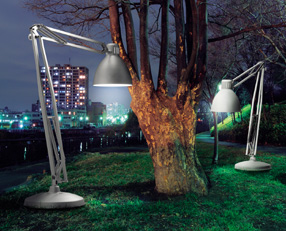
the-great-JJ-tr-odGardens are the perfect place to use accent lights; add some fun or make a statement and create some drama. Consider up lighting your favorite old tree or try moonlighting from that same tree. (Be sure to take care when selecting products that will be mounted in trees; you will want to use mounting apparatuses that will not do any damage.)

Play with the fixture positions before you do the final install. Try both front lighting and back lighting shrubs to see how the brightness and contrast change. Notice how different the plants look when you move the lights to different locations? Create shadows, highlight architectural details, direct the viewer’s eye through your space…have some fun with it!

Posted in Tips | Comments Off

Spring is in the air!

taos_sq_led_installOften overlooked, outdoor lighting can add value to your property, increase safety and create an atmosphere that will give your guests that welcome feeling.

Creating an outdoor room is a perfect place to start. Already have the BBQ and a patio table? By simply adding a BBQ light or a portable lamp, you have already begun creating your outdoor living space.

Layering outdoor lighting, just like you would do in the interior, will create even more ambience to your space. Maybe add an outdoor fan, a pendant or a chandelier over your table and you will be able to enjoy your outdoor space well beyond sunset.

Posted in Tips | Comments Off